How to Sell Your Music and Merch Directly to Fans Without Giving Up a Cut
Olumide Ojelere
Author
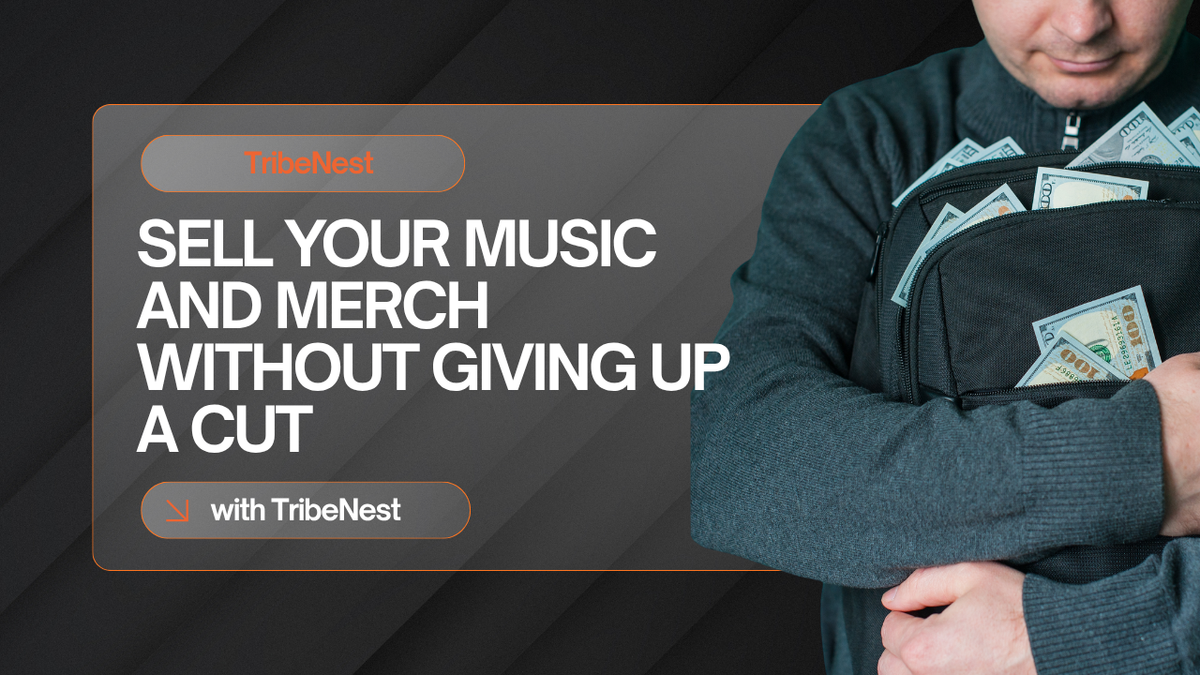
Stop building someone else's platform. Start building your own.
You've spent months, maybe even years, building your music career.
You've released songs that people genuinely connect with. You've designed merchandise your fans are proud to wear. You've invested time creating content, growing your social media presence, and showing up consistently, one post, one performance, and one release at a time.
Then the sales start coming in.
A fan buys your hoodie.
Someone purchases your latest EP.
Another joins your mailing list after discovering your music online.
It feels like progress? Of course it is.
But behind every sale, another story is unfolding.
A marketplace keeps a percentage of your revenue.
A payment processor deducts another fee.
Your followers belong to an algorithm that decides whether they'll even see your next announcement.
The customer who bought your merch? You might never get the chance to build a lasting relationship with them.
Little by little, pieces of your business are scattered across different platforms, each taking a slice of your revenue or controlling part of your audience.
The frustrating part isn't paying for valuable tools. Every business has operating costs.
The real challenge is building your career on platforms you don't own.
Because when someone else owns the customer relationship, controls how your products are discovered, or decides how your content is distributed, you're not building a business on your own terms, you're building it on borrowed ground.
That's why more independent artists are embracing a different approach.
Instead of relying solely on streaming platforms, third-party marketplaces, or social media, they're creating a digital home where everything lives under one roof.
A place where fans can discover new music, buy exclusive merchandise, join premium communities, purchase digital products, book experiences, and stay connected long after the latest single has dropped.
They're building businesses, not just selling songs.
And that's exactly where direct-to-fan commerce is changing the game.
In this blog, we'll explore how independent artists can build a business they truly own, sell music and merchandise directly to fans, create new revenue streams, and keep more of what they earn. More importantly, we'll show why owning your platform, not just your content, is becoming one of the smartest decisions any creator can make.
Building a Direct-to-Fan Business in 7 Steps
Building a successful music business isn't about being everywhere. It's about creating one place where everything comes together.
Think about your favorite independent artists. Chances are you didn't discover everything they offer in a single day.
Maybe you found ]them through a playlist. Weeks later, you subscribed to their newsletter. A month after that, you bought a hoodie. Eventually, you joined their fan club, attended a virtual event, or purchased a limited-edition vinyl.
That's not an accident.
It's a journey.
The best creator businesses are designed to guide fans naturally from discovering your work to becoming loyal supporters.
Here's how to build that journey.
1. Create a Home Base You Actually Own
Social media is excellent for getting discovered.
Your website is where relationships are built.
That's an important distinction.
Platforms like Instagram, TikTok, YouTube, and Spotify are incredibly valuable for introducing people to your music, but they're borrowed spaces. You don't control how your content is distributed, who sees your posts, or what happens when algorithms change.
Your website, on the other hand, is entirely yours.
It's the one place where your music, merchandise, story, events, and community live together under your own brand.
More importantly, it's where fans can interact with you without distractions from competing artists or endless feeds.
A modern artist website should do far more than display a biography and a few songs. It should help visitors discover your work, explore your catalog, shop your latest merch, join your community, subscribe to your mailing list, and stay connected long after they leave.
That's why many independent artists are moving away from stitching together multiple services and instead building everything on a single platform.
With TribeNest, your website becomes more than a digital business card. It becomes the central hub of your creator business, bringing together your storefront, memberships, blog, events, customer relationships, and marketing tools in one place.
2. Turn Listeners Into Fans You Can Reach Anytime
Imagine announcing a new album to 100,000 followers.
Now imagine only a fraction of them ever seeing your post.
That's the reality of relying solely on social media.
Algorithms decide what appears in people's feeds, which means your ability to reach your own audience is never completely within your control.
Owning your audience changes that.
Every email subscriber is someone who has chosen to hear from you.
Every member of your community has raised their hand and said, "I want to stay connected."
That relationship is far more valuable than a passive follower because it gives you a direct line of communication whenever you have something worth sharing.
Whether you're announcing a new single, launching a merch collection, promoting a tour, or offering exclusive content, email remains one of the most effective ways to reach people who already care about your work.
Growing your mailing list isn't about collecting addresses.
It's about building a community you own.
With TribeNest's built-in email marketing and CRM tools, you can grow that community, organize your audience, automate campaigns, and stay connected with fans without relying on separate marketing platforms.
3. Give Fans More Ways to Support You
One of the biggest opportunities for independent artists isn't finding more fans, it's creating more ways for existing fans to support their journey.
Think about the different kinds of supporters in your audience.
Some simply enjoy listening to your music.
Others proudly wear your merchandise.
Some would happily pay for early access to new releases or behind-the-scenes content.
Others want a closer connection through live sessions, exclusive communities, or premium memberships.
Your business should reflect those different levels of engagement.
Instead of offering a single product, create an ecosystem where every fan can participate in the way that feels right for them.
That might include:
- Digital albums and exclusive releases.
- Apparel and branded merchandise.
- VIP memberships.
- Fan clubs and private communities.
- Production resources and sample packs.
- Virtual concerts or listening parties.
- Workshops and masterclasses.
- Signed collectibles and limited-edition drops.
The beauty of this approach is that it doesn't depend on one income stream. Each offering complements the others, creating a more resilient business that's less vulnerable to changes in streaming revenue or marketplace fees.
With TribeNest, you can manage digital products, memberships, events, and merchandise from one platform, giving your fans a seamless experience while simplifying your operations behind the scenes.
4. Build a Brand Fans Want to Belong To
People rarely become loyal because of products alone.
They become loyal because they connect with a story.
Every independent artist has one.
Why you started making music.
The challenges you've overcome.
The meaning behind your lyrics.
The moments that shaped your sound.
These are the stories fans remember.
Sharing them consistently through blog posts, newsletters, videos, and exclusive content helps people feel invested in your journey, not just your next release.
That's why content should be viewed as part of your business strategy, not simply your marketing strategy.
Every article you publish, every update you share, and every behind-the-scenes moment strengthens the relationship between your brand and your audience.
Over time, those relationships become far more valuable than chasing short-lived viral moments.
A blog, for example, isn't just good for storytelling. It also helps new fans discover your website through search engines, creating opportunities for long-term organic growth.
When your content, products, and community all live together, each one strengthens the others.
5. Simplify Your Tech Stack So You Can Focus on Creating
As your music business grows, so does the number of tools you rely on.
One platform hosts your website.
Another sells your merch.
A different one manages your email list.
You use another tool to host exclusive content, another for event registrations, and yet another to keep track of customers.
Individually, each tool solves a problem.
Collectively, they create a new one.
More subscriptions.
More logins.
More integrations.
More opportunities for something to break.
Most artists don't start making music because they dream of managing software. They want to create, perform, and connect with fans, not spend hours switching between dashboards.
That's why the most sustainable creator businesses are built on platforms that work together, rather than a collection of disconnected tools.
With TribeNest, you don't have to piece your business together.
Your website, online store, memberships, blog, email marketing, CRM, payments, events, and digital products all work from one platform. Instead of wondering whether your tools are communicating with each other, you can focus on what matters most, creating great music and building meaningful relationships with your audience.
As your career grows, your platform grows with you.
6. Use Data to Understand Your Fans, Not Just Count Them
It's easy to become obsessed with vanity metrics.
Streams.
Followers.
Likes.
Views.
While those numbers can be encouraging, they don't always tell you what your audience actually wants.
A thousand likes on a post doesn't necessarily translate into a thousand sales.
What matters is understanding how your fans interact with your business.
Which products are selling the most?
Where are visitors dropping off before completing a purchase?
Which blog posts are bringing new fans to your website?
What emails are generating the highest engagement?
Answering these questions helps you make better decisions instead of relying on guesswork.
This is where technology becomes more than a convenience—it becomes a competitive advantage.
With Mira, TribeNest's AI-powered business assistant, creators can uncover insights that help them understand customer behavior, identify growth opportunities, and make smarter business decisions. Instead of spending hours digging through reports, you can focus on turning those insights into action.
The more you understand your audience, the easier it becomes to create products, experiences, and content they'll genuinely value.
7. Build a Business That Grows Beyond Your Next Release
Every artist experiences the excitement of release day.
You announce a new single.
Fans stream it.
You promote it across social media.
Then, after a few weeks, attention begins to shift elsewhere.
Many music careers become trapped in this cycle, constantly chasing the next release to generate income.
A direct-to-fan business breaks that pattern.
Instead of relying on one moment, you're building an ecosystem that continues creating opportunities long after release day.
Your blog attracts new visitors through search.
Your website introduces people to your story.
Your merchandise keeps your brand visible in the real world.
Your memberships generate recurring revenue.
Your email list keeps fans engaged between releases.
Your community gives people a reason to stay connected all year round.
Each part of your business supports the others.
Instead of asking, "How do I make my next release successful?"
You begin asking,
"How do I build a brand fans want to be part of for years to come?"
That's the mindset that transforms independent artists into sustainable businesses.
Why TribeNest Is Built for Independent Artists
Building a direct-to-fan business shouldn't require managing half a dozen different platforms.
As an artist, your time is better spent writing songs, creating experiences, and connecting with your audience, not troubleshooting software or paying for overlapping subscriptions.
That's where TribeNest stands apart.
Rather than offering a single tool, TribeNest provides the complete foundation for building your creator business.
From one platform, you can:
- Build a professional website that reflects your brand.
- Sell music, merchandise, and digital products.
- Launch exclusive memberships and fan communities.
- Publish blog content to grow your audience organically.
- Collect payments securely.
- Manage customer relationships with an integrated CRM.
- Send email campaigns and automate audience engagement.
- Host events and exclusive experiences.
- Use Mira AI to gain actionable insights that help your business grow.
Everything works together because it was designed to.
Your website becomes your home.
Your store becomes your revenue engine.
Your community becomes your biggest marketing channel.
And your audience becomes something you truly own.
Instead of building your business on rented platforms, you're building an ecosystem that's entirely yours.
Frequently Asked Questions
Do I need my own website if I'm already selling on streaming platforms?
Yes. Streaming platforms are excellent for discovery, but they aren't designed to help you build direct relationships with fans. A website gives you complete control over your brand, products, audience, and customer experience.
What's the best way to sell music directly to fans?
The most effective approach is to combine a professional website with digital downloads, merchandise, memberships, and email marketing. This creates multiple ways for fans to support your work while giving you greater ownership of your audience.
Can independent artists really make money without a record label?
Absolutely. Many independent artists generate income through merchandise, memberships, digital products, live events, exclusive content, licensing, and direct music sales. The key is diversifying your revenue rather than relying on a single source.
Why should I sell merch from my own website?
Selling through your own website gives you more control over your brand, customer experience, and audience relationships. It also reduces your dependence on third-party marketplaces and helps you build a business that grows over time.
What should musicians sell besides music?
Many artists successfully sell apparel, collectibles, memberships, online courses, sample packs, lyric books, virtual experiences, exclusive content, and other digital products alongside their music.
Final Thoughts
Independent artists have never had more opportunities to build successful businesses.
You no longer need to wait for permission to release your music, launch a merchandise line, or connect with fans around the world.
But opportunity alone isn't enough.
The artists who thrive in today's creator economy are the ones who invest in something more valuable than followers, they invest in ownership.
They own their brand.
They own their audience.
They own the experience they create for their fans.
And because of that, they're able to build businesses that continue growing long after the excitement of a new release fades.
Your music will always be at the heart of your journey, but it doesn't have to be your only source of income.
By creating a direct relationship with your audience, expanding the ways fans can support you, and building on a platform designed for long-term growth, you can turn your passion into a business that's resilient, sustainable, and entirely your own.
TribeNest was built for creators who want more than a storefront. It was built for those who want to own their audience, grow their community, and manage every part of their business from one place.
Because when you stop building someone else's platform and start building your own, you're not just keeping more of what you earn.
You're creating something that lasts.
Olumide Ojelere
Written by